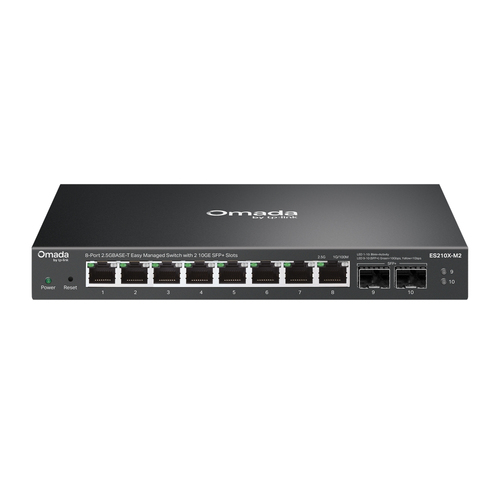
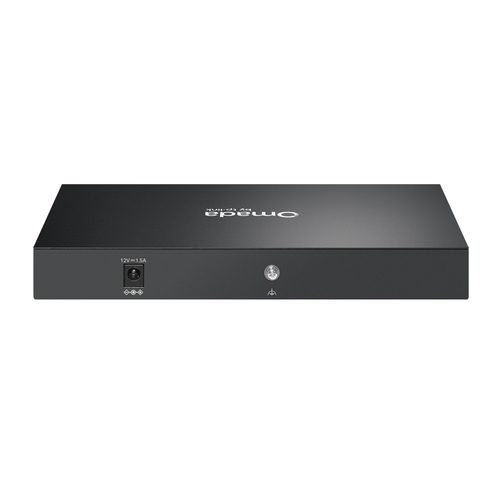
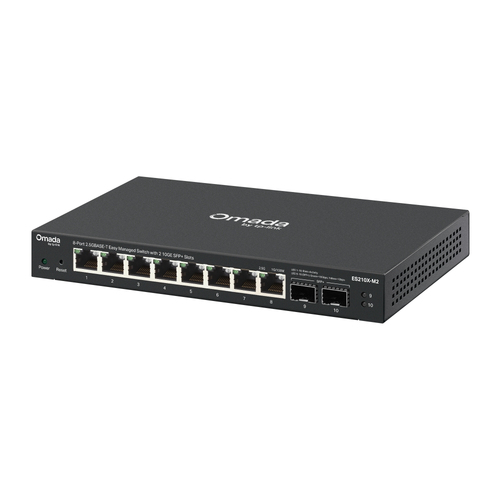
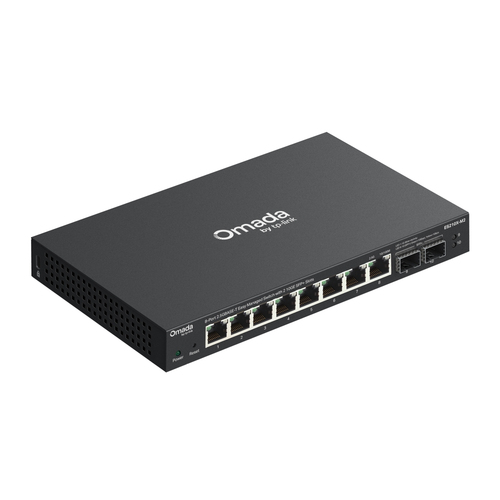
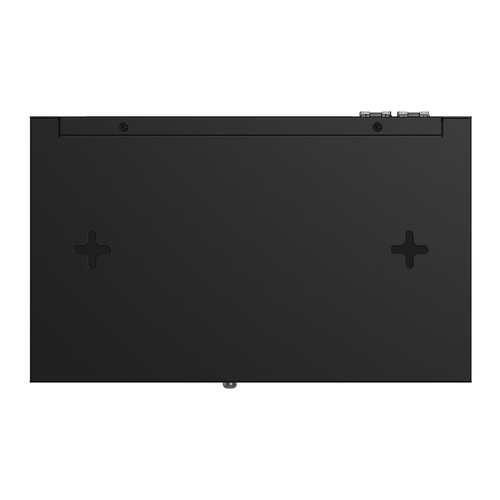
The Omada ES210X-M2 8-Port 2.5G BASE-T Easy Managed Switch from TP-Link is a compact, high-performance multi-gigabit switch designed for modern networks that require more than classic Gigabit speeds. With eight 2.5G BASE-T RJ45 ports, it enables a significant bandwidth boost for Wi-Fi 6/6E access points, high-performance workstations, NAS systems and small server environments, without requiring a complete infrastructure overhaul. The switch is designed as an "Easy Managed" model, offering an intuitive management experience while still delivering essential network control functions.
Technically, the ES210X-M2 supports 2.5G over standard copper Ethernet cabling (Cat5e or higher, depending on cable quality and length), allowing many existing installations to be upgraded to multi-gig speeds. As an Omada series switch, it is designed to integrate into TP-Link's Omada Software Defined Networking (SDN) ecosystem (for example via Omada controller, hardware controller or cloud-based management), enabling centralized configuration, monitoring and maintenance together with access points, gateways and other switches in the same family. Typical managed features in this class include VLAN configuration for network segmentation, QoS (Quality of Service) prioritization for latency-sensitive traffic such as voice, video conferencing or critical business applications, link aggregation on supported ports for higher throughput and redundancy, as well as basic security settings like access control on ports and protection against simple network attacks. Energy-efficient Ethernet features typically help to reduce power consumption by adapting energy use to current traffic loads and inactive ports.
In terms of applications, the Omada ES210X-M2 is well-suited for small and medium-sized businesses, branch offices, hospitality environments, education and demanding home offices. It is ideal as an aggregation or access switch for multiple Wi-Fi 6 access points that each support 2.5G uplinks, ensuring that wireless performance is not bottlenecked by a 1G switch. It can also serve as a central switch for creative professionals (video editing, 3D design, photography) or small teams working with large files, where faster file transfers to and from NAS storage can significantly improve productivity. In environments with IP cameras, VoIP phones, and business applications running in parallel, the managed features of the Omada ES210X-M2 help to separate traffic via VLANs, prioritize security or voice data, and keep the network stable and transparent.
The main advantages of the ES210X-M2 include higher bandwidth through eight 2.5G ports in a compact form factor, support for Omada's centralized management with a unified interface for the entire network, and an attractive performance-to-cost ratio. Easy management reduces complexity for IT administrators and technically inclined users alike, lowering operational effort while still enabling professional features. By combining multi-gigabit performance with energy-conscious operation and modern management functions, the switch protects your investment and makes it easier to gradually upgrade parts of your infrastructure as bandwidth needs increase.
TP-Link is a globally active networking manufacturer and has established itself over many years as a provider of reliable and affordable network products - from routers and switches to access points and smart home components. The company publishes information on sustainability measures such as more efficient product designs, reduced energy consumption of devices, optimized packaging and efforts to prolong device life cycles through firmware updates and ecosystem integration. Choosing a switch like the Omada ES210X-M2 can therefore contribute to a more resource-efficient IT environment: centralized management can reduce the need for additional hardware, energy-efficient operation helps lower power usage, and the multi-gigabit performance allows you to extend the useful life of existing cabling and many end devices. As a customer, investing in this device not only improves your network performance and reliability, but also supports a more sustainable use of technology and resources in your digital infrastructure.






 Network
19.016
- NAS/Storage 249- Power over Ethernet 67- Powerline 68- Repeater/Extender 163- Router/Switches 2.901- Video Surveillance 2.033- WLan 785- more Network 12.750Scanner 557Servers&Accessories 6.851Tablets 1.745
Network
19.016
- NAS/Storage 249- Power over Ethernet 67- Powerline 68- Repeater/Extender 163- Router/Switches 2.901- Video Surveillance 2.033- WLan 785- more Network 12.750Scanner 557Servers&Accessories 6.851Tablets 1.745